The modern business landscape relies heavily on supply chains, intricate networks that facilitate the seamless movement of goods from manufacturers to consumers. These supply chains are not without their challenges; optimizing them has been a long-standing business goal. In recent years, automation, particularly Robotic Process Automation (RPA), has emerged as a transformative force in supply chain management. This article takes an in-depth look at how RPA is revolutionizing supply chains, focusing on warehousing and transport management.
Before we delve into the specific ways RPA is reshaping supply chains, it’s essential to understand why this technological revolution is happening. Supply chain optimization has always been a priority for businesses looking to enhance efficiency, reduce costs, and meet customer demands promptly.
Traditionally, supply chain management was labor-intensive and rife with opportunities for errors and delays. Human involvement introduced inefficiencies, inaccuracies, and bottlenecks. However, automation technologies like RPA have opened up new possibilities for optimizing supply chains.
Unlocking Efficiency in Warehousing with RPA Logistics
Warehousing is a linchpin in the supply chain, serving as the hub where goods are received, stored, and dispatched. RPA, with its capacity to automate repetitive tasks and streamline processes, is fundamentally changing how warehousing operations are managed.
Inventory Management: Precision and Efficiency
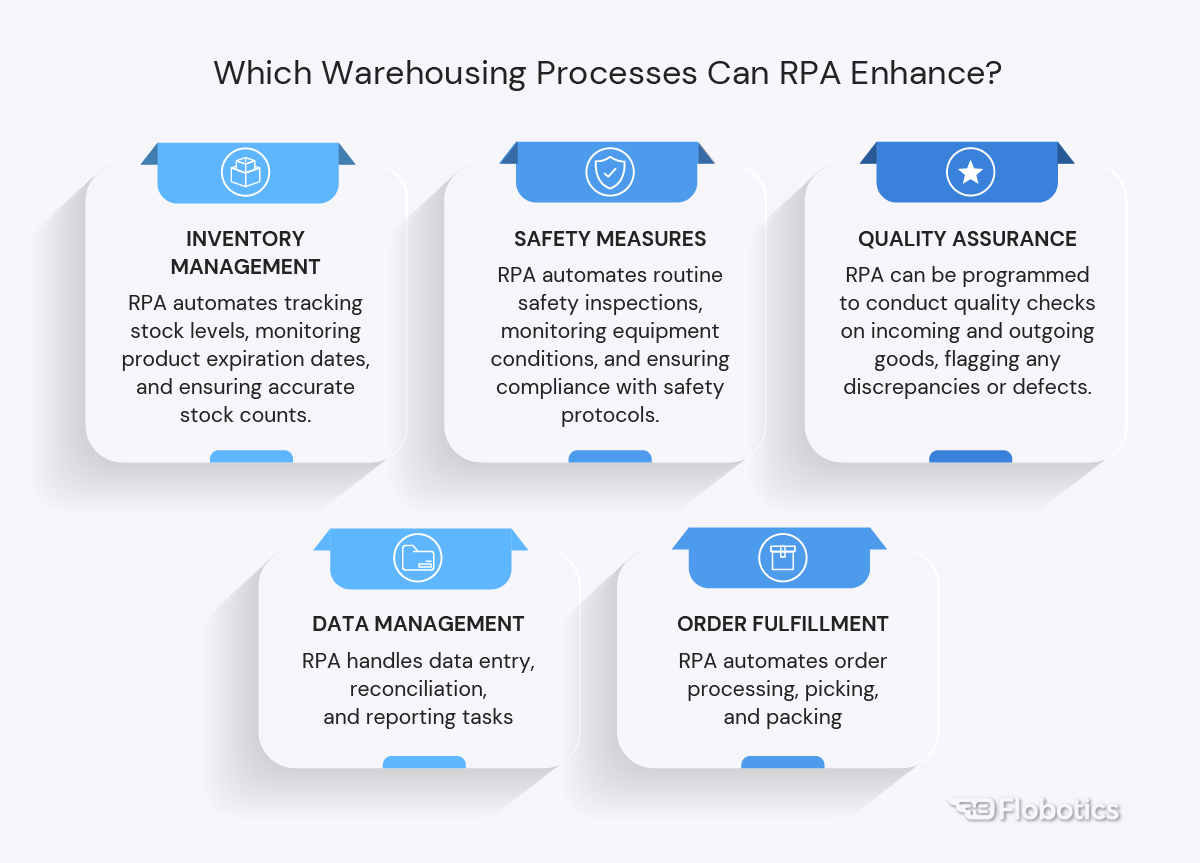
Inventory management involves a delicate balance of supply and demand. It includes tracking stock levels, monitoring product expiration dates, and ensuring accurate stock counts. RPA is a game-changer in this area, automating tasks to maintain optimal inventory levels and reduce carrying costs. In contrast, a full-scale warehouse management system would be ideal.
Order Fulfillment: Speed and Accuracy
The speed and accuracy of order fulfillment are paramount in satisfying customer expectations. RPA automates order processing, picking, and packing, significantly reducing errors and enhancing order turnaround times. This ensures customers receive their orders promptly, increasing satisfaction and loyalty.
Quality Assurance: Ensuring Excellence
Quality control and assurance are integral to any warehousing operation. RPA can be programmed to conduct quality checks on incoming and outgoing goods, flagging any discrepancies or defects. This maintains product quality and reduces the likelihood of costly returns and replacements.
Data Management: Precision and Timeliness
Warehouses generate vast amounts of data daily. RPA handles data entry, reconciliation, and reporting tasks efficiently. This ensures decision-makers can access accurate and up-to-date information, enabling better strategic planning and forecasting.
Enhancing Warehouse Automation Process & Safety
Safety is paramount in warehousing operations. RPA can augment safety measures by automating routine safety inspections, monitoring equipment conditions, and ensuring compliance with safety protocols. This enhances the well-being of warehouse staff and reduces the risk of accidents and disruptions.
RPA in Warehousing: Case Study
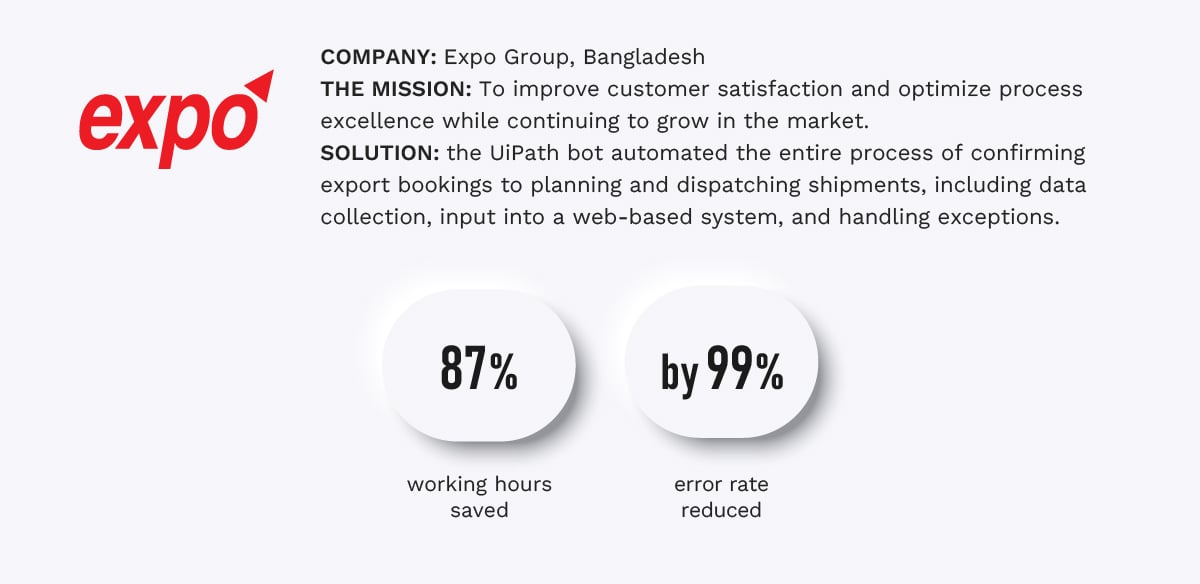
An illustrative case of successful RPA implementation is Expo Group, which implemented an attended software robot to streamline its operations. Prior to RPA, employees at Expo Group were spending an average of 8.35 hours each day on inefficient tasks. However, with the introduction of RPA, this time was dramatically reduced to just 48 minutes, resulting in a remarkable 87.23% reduction in working hours. Furthermore, the implementation of RPA at Expo Group led to a staggering 99.97% decrease in error rates. This improvement not only saved time but also significantly enhanced the accuracy and reliability of the company’s processes. These results underscore the transformative potential of RPA in not only driving operational efficiency but also in elevating the overall quality of services provided to customers.
These real-world examples demonstrate how RPA can bring about rapid and substantial improvements in operational efficiency, resource utilization, and customer satisfaction, making it a compelling choice for businesses seeking to stay competitive in today’s dynamic market landscape.

Let’s talk!
In just 15 minutes, we’ll cut through the noise and see if automation works for you.
Optimizing Transport Management with RPA
Transportation management is another critical aspect of the supply chain that faces its own unique set of challenges. RPA offers innovative solutions to address these hurdles.
Route Optimization: Efficiency Redefined
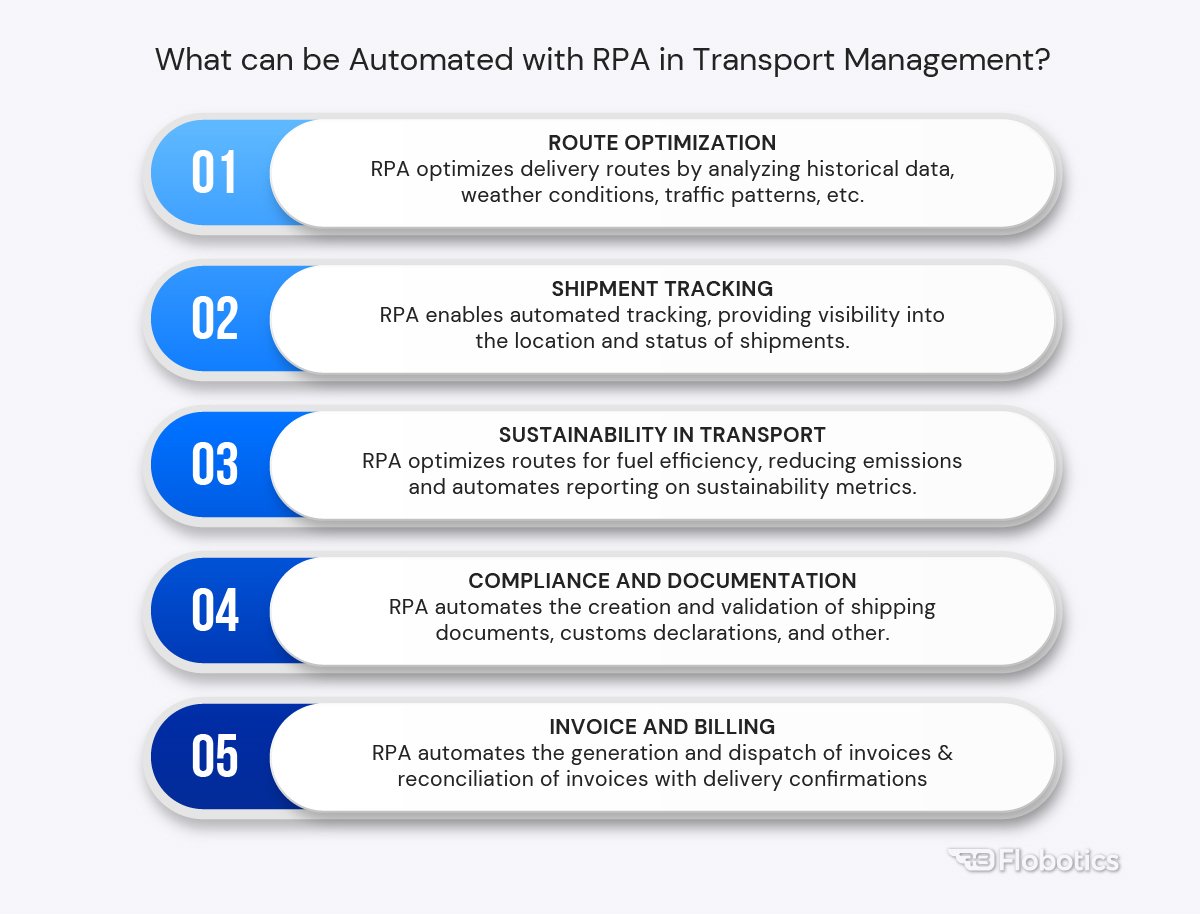
Efficient route planning is essential for minimizing transportation costs and delivery times. RPA algorithms analyze historical data, weather conditions, traffic patterns, and other factors to optimize delivery routes. This not only reduces fuel consumption but also ensures timely deliveries.
Shipment Tracking: Real-time Visibility
Real-time tracking of shipments is crucial for businesses and customers alike. RPA enables automated tracking, providing visibility into the location and status of shipments. This transparency enhances customer trust and enables businesses to proactively address any delays or issues.
Invoice and Billing: Streamlined Processes
Accurate and timely invoicing is vital for cash flow management. RPA automates the generation and dispatch of invoices, ensuring they are error-free and sent promptly. Additionally, it can reconcile invoices with delivery confirmations, reducing disputes and delays in payment processing.
Compliance and Documentation: Navigating Regulations
Transporting goods often involves regulatory compliance and extensive documentation. RPA assists in managing compliance requirements by automating the creation and validation of shipping documents, customs declarations, and other essential paperwork. This minimizes the risk of costly compliance errors and delays at border crossings.
Sustainability in Transport
Sustainability is a growing concern in logistics. RPA can contribute to sustainable transport management by optimizing routes for fuel efficiency, reducing emissions, and helping businesses meet their environmental goals. Additionally, it can automate reporting on sustainability metrics, ensuring transparency and accountability.
The Wider Impact on the Supply Chain
The transformative power of RPA extends beyond warehousing and transport management, influencing other critical aspects of supply chain management.
Demand Forecasting: Precision Planning
Accurate demand forecasting is essential for minimizing excess inventory and stockouts. RPA analyzes historical sales data, market trends, and other variables to provide more precise demand forecasts. This enables businesses to optimize production and inventory levels, reducing costs and increasing customer satisfaction.
Supplier Management: Strengthening Relationships
Managing supplier relationships is vital for ensuring a reliable supply of materials and components. RPA automates supplier communication, order placement, and performance tracking. This streamlines the procurement process, reduces lead times, and minimizes supply chain disruptions and supply challenges.
Customer Service: Enhancing Satisfaction
Exceptional customer service sets businesses apart in today’s market. RPA enhances customer service by automating routine inquiries, order status updates, and returns processing. This allows human agents to focus on complex customer interactions, leading to improved customer satisfaction.
Holistic Supply Chain Visibility
RPA can provide a holistic view of the entire supply chain by integrating data from various sources and systems. This enables businesses to make informed decisions, quickly identify and address issues, and improve overall supply chain performance.
Embracing the RPA Revolution
In conclusion, Robotic Process Automation (RPA) is not just a technological trend; it represents a fundamental shift in the operations of supply chains. The integration of RPA in warehousing, transport management, and other supply chain functions has the potential to unlock unprecedented efficiencies, cost savings, and customer satisfaction.
At Flobotics, we understand the transformative power of automation. We can help evaluate your business processes and implement automation solutions tailored to your needs. Automation through RPA is not a mere option; it’s the future of supply chain management. Let’s start a conversation about how Flobotics can assist your business on this journey to efficiency and excellence.
With the power of RPA, your supply chain can achieve new heights of efficiency and productivity, ensuring your business thrives in the ever-evolving landscape of commerce. We can provide more insights into RPA challenges, use cases, and its impact on logistics and supply chain management and also showcase explore our successful automation implementations.
Like the article? Spread the word
Ready to automate your business processes?
Karl – our CTO loves to discuss the ROI. Feel free to book a call with him.
In just 15 minutes, we’ll help you assess whether automation is right for you.